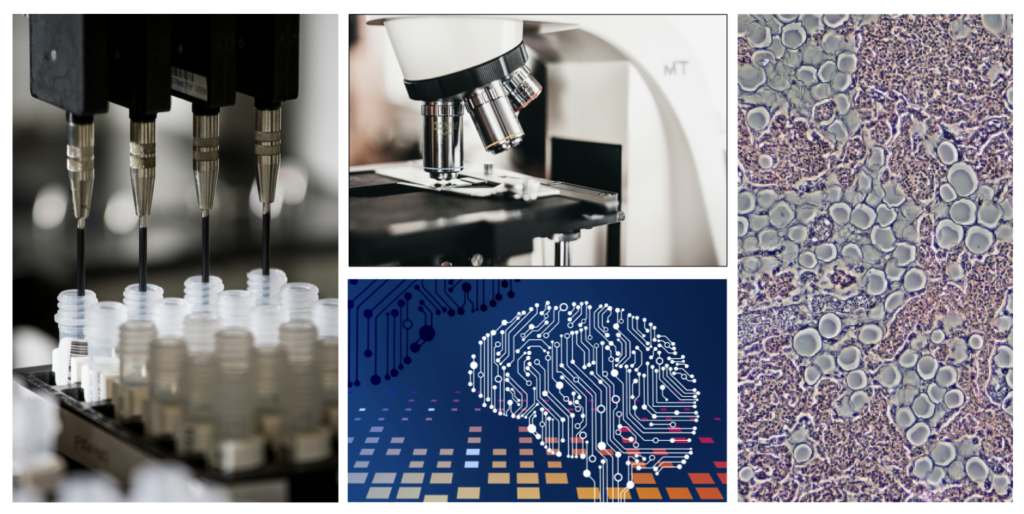
In the Smart Microscopy Lab we focus on understanding how to connect bioimage analysis with computer-controlled microscopy to generate automated and adaptive imaging workflows and to enable quantitative and statistically meaningful results in complex biological systems. This approach brings new challenges, such as performing real-time image processing, accessing and controlling instrument hardware via suitable software, designing efficient workflows, and handling large data sets during operation. The possibilities to combine different imaging technologies, to trigger imaging modalities based on the real-time image analysis results, and to synchronize image acquisition with external devices for sample manipulation (i.e., liquid handling or cell manipulation) enable the automation of complex workflows. Its adaptive feedback mode allows autonomous operation, and efficiently examines tens of thousands of cells. Such workflows allow researchers to acquire images in a less biased, more reproducible, and faster way than manual imaging by means of experiments otherwise hardly feasible.
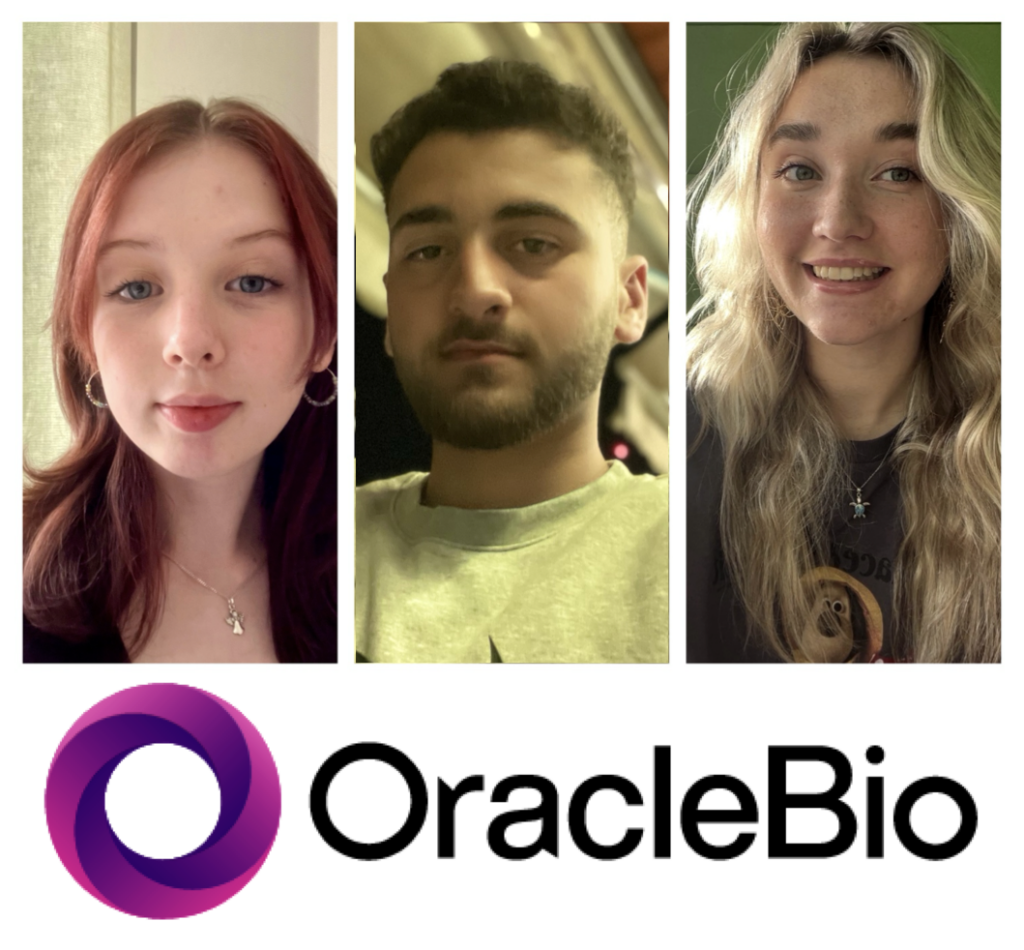
Over the coming months, they’ll investigate whether diffusion-generated synthetic pathology images can help build AI models that are more robust to limited, imbalanced, and variable real-world datasets. A fantastic opportunity to work on a real-world challenge at the intersection of biomedical science and AI. Looking forward to following their progress!
October 2026 – Welcome to Helaina!
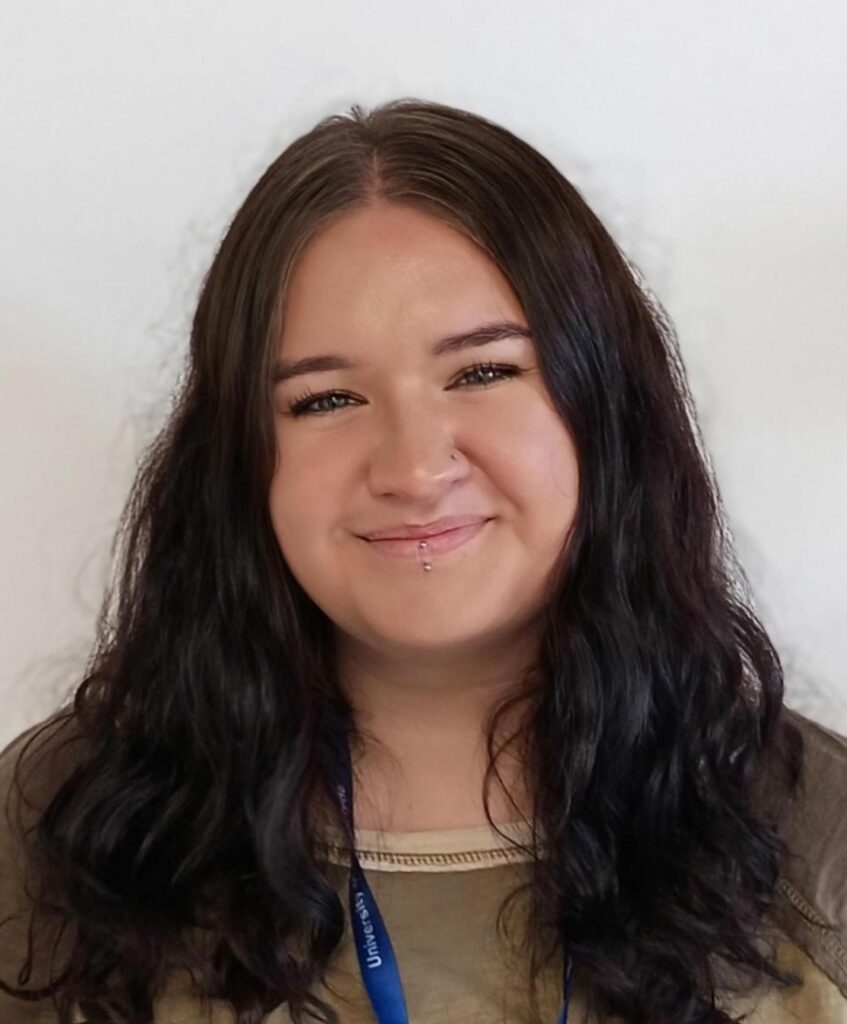
We are delighted to welcome Helaina Taylor, who has just started her PhD with our group as part of the UKRI AI CDT SUSTAIN. Helaina’s project will focus on developing a new device for the rapid detection of mastitis in cow’s milk, with the aim of developing innovative approaches for improving animal health and supporting more sustainable dairy farming. The project is being carried out in collaboration with Queen’s University Belfast, bringing together complementary expertise in biomedical engineering, sensing and biological sciences. We are very excited to have Helaina join the team and look forward to seeing her research develop over the coming years. October 2026
Septemeber 2026 – Our lab’s first paper is now on arXiv!
Huge congratulations to Philip Graemer, who led this research.
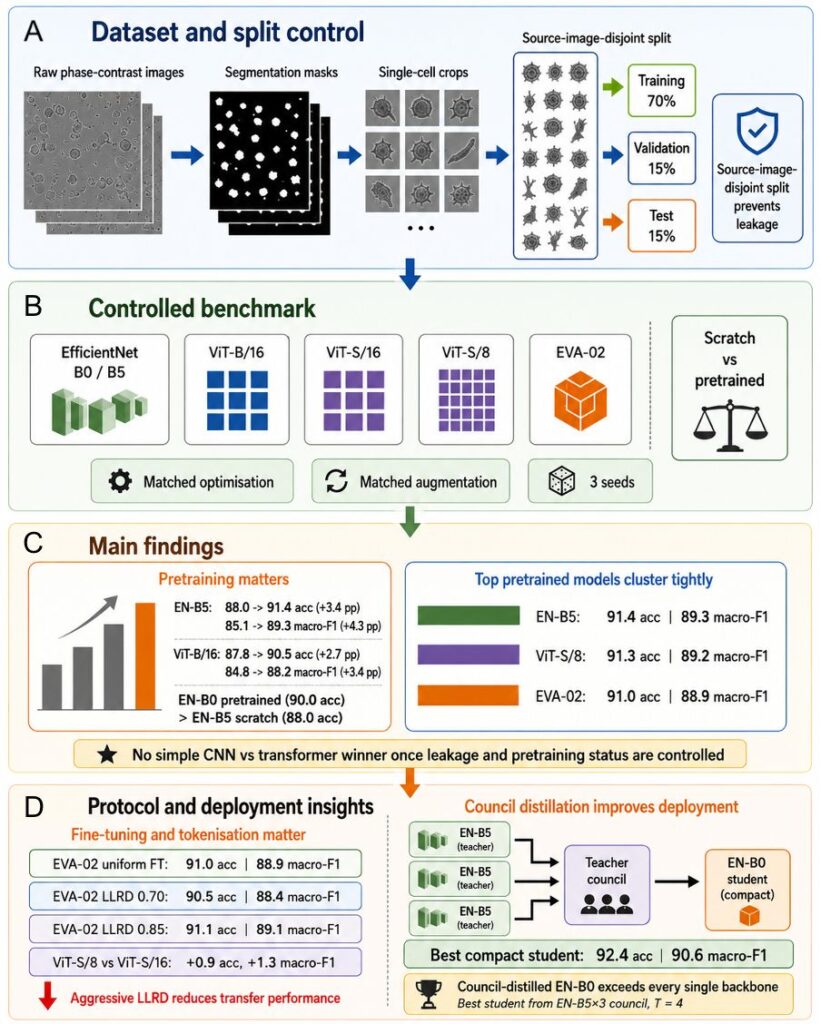
We asked the following question: for classifying individual cells from microscopy images, does it really matter whether you use a CNN or a Vision Transformer (ViT)? The answer surprised us: not nearly as much as we might think. once both models are pretrained, the best CNN and ViT were separated by less than half a point in performance, while pretraining itself gave a much bigger boost.We also found that knowledge distillation, teaching a small model from several larger ones, can push performance even further, allowing a compact model to outperform the much larger models. Together, the results suggest that for isolated single-cell crops, context may matter less than we thought, and that pretraining and how we transfer knowledge can be more important than the choice between CNN and transformer.